
Training & conferences
Why do people stay chronically ill? Jean’s notes from Dr Robert Naviaux’s talk on the Cell Danger Response and the healing cycle.
Jean Dow
Medical Herbalist & Functional Medicine Practitioner
Contrary to what everyone may expect, the conference in Phoenix was a mainstream affair. Our speakers were all mainstream medical practitioners, hailing from some of the best universities in the USA, and were amongst the top medical experts in their fields.
The topics we were looking at are so complex that frequently the patients who present at these clinicians’ practices have been dismissed by general practitioners as either hypochondriacs, or have been tagged with a mental health problem, as their symptoms are so diffuse and seemingly unexplainable. We were discussing the patients whose symptoms fluctuate day to day, whose symptoms switch between every system in the body, from muscular to neurological, gastric, cardiovascular, sensory, emotional, energy and so on, and some days all of those systems.
01
The very first speaker was Dr Robert K. Naviaux, MD, PhD, Professor of Medicine, Pediatrics, Pathology, and Genetics, and Co-Director of the Mitochondrial and Metabolic Disease Center, University of California, San Diego School of Medicine. He initially focussed on an explanation of how the medical model just doesn’t fit our health requirements now.
He explains that the “first book of medicine” was designed for acute care for issues like poisoning, infection, physical injury and symptomatic treatment of chronic illness. What medicine needs now, he suggests, is the second book of medicine, which is much more focussed on molecular recovery therapies, directed to the chronic host response to acute injury. Chronic disease is an actively maintained reaction to an injury, not unlike a scab or wound that will not heal. The disease that is left behind is not the initial injury, or agent of injury itself.
He asked:
Why are more people getting sick? The environment is becoming increasingly toxic.
Why do people stay chronically ill? They can’t heal completely.
Why can’t they heal? The healing cycle is blocked, or they are being continuously re-injured, or both.
02
His discussion was around a theory called the Cell Danger Response, which is a universal response to injury or chronic toxic exposure. This is a co-ordinated set of metabolic, gene expression, cellular, autonomic, neuroendocrine, immune, microbiome, GI, and behavioural changes that occur when cells are injured. This is a normal response to any injury in the body, which should follow a set of chemical reactions that bring about change and healing. This is what makes up the healing cycle.
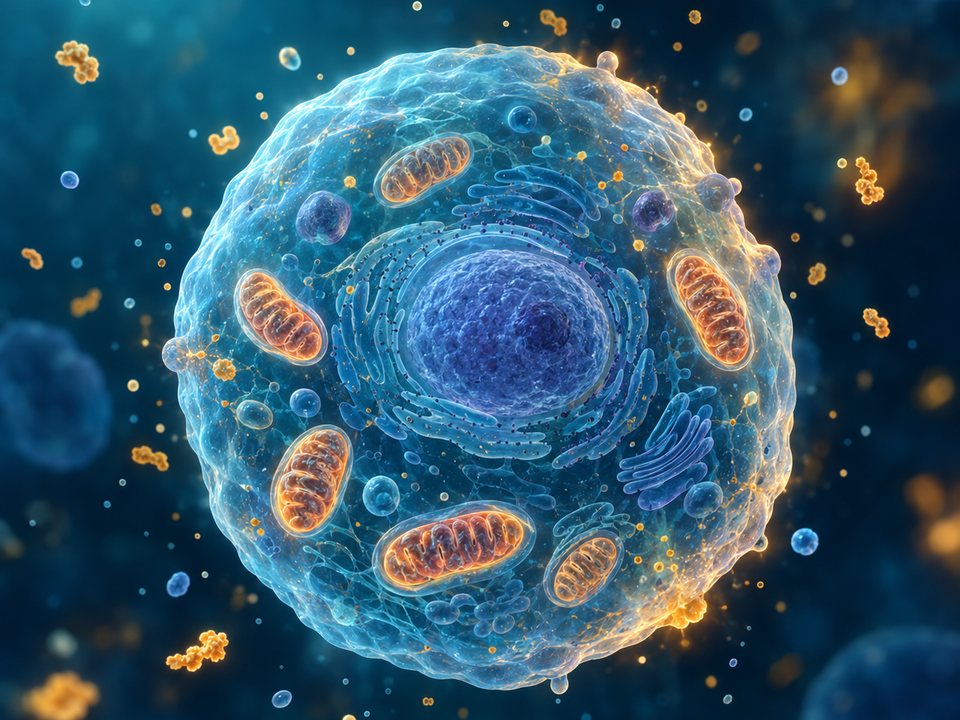
The mitochondria in our body are responsible for our energy production. They have three stages of development: one for growth, one which is pro-inflammatory for defence, and one anti-inflammatory for normal healthy conditions. The Cell Danger Response co-ordinates mitochondrial function after every injury. The healing cycle is genetically programmed, again a three-step process to ensure recovery after any kind of injury.
03
What we are finding with patients with chronic toxic states, multiple chemical sensitivity or chronic Lyme disease is that this Cell Danger Response is constantly switched on and is in a permanently active, stressed state. All stressed cells leak ATP, which is how we store and transport energy in our cells. Treating the Cell Danger Response has been shown to improve dozens of abnormal metabolic features.
The focus of the whole seminar was how we can address this actively stressed state in our patients. A fascinating study was done showing that the context of the exposure to a Cell Danger trigger strongly determined the outcome. It was shown that with troops being deployed to the Gulf War, if they were given their six vaccines whilst on active duty as opposed to prior to being deployed, they increased the risk of Gulf War Syndrome fivefold.1 In other words, in a body already carrying a heavy “body burden”, or stress load (see Charmaine’s blog), you were more likely to have a serious multisystem failure in health.
We are so thankful to be able to attend these seminars, to learn from the world’s leading experts and be able to bring back the treatment suggestions to our patients.
Refs
Hotopf et al. (2000), relationship between vaccines received before and during deployment and multi-symptom illness in Gulf War veterans. PubMed ID 10818024. pubmed.ncbi.nlm.nih.gov/10818024 ↩
Keep reading

Herbal medicine
7 Sep 2026
2 min read
Read →

Brain health
18 Aug 2026
2 min read
Read →

Herbal medicine
10 Aug 2026
2 min read
Read →
This article was first published on the CogMission blog. CogMission is Jean’s sister company, specialising in brain health.
This article is for general information and isn’t a substitute for personal medical advice. Please don’t start or stop any medication without speaking to a qualified practitioner.
Book a free 15-minute call to talk about your health and whether Jean can help.
Free, no obligation. Consultations from £240 + VAT. See fees