Home / Articles / Training & conferences

Training & conferences

Toxicity and the challenges it presents: the ISEAI conference

Why Jean and Charmaine went to Phoenix to learn from the world’s toxicity experts, and why most cognitive cases have an element of toxicity.

Charmaine Shepherd

Acupuncturist & CogMission co-founder

Working with the Bredesen Protocol has been an incredible journey for Jean and myself, but one of the biggest challenges we face is when our patients show up as having type 3 (toxicity) contributors.

This is one area where the complications that these cases bring have meant that we’ve had very limited success. At CogMission the biggest concern is what we can do for this patient group. After discussing this with Dr Bredesen, the team agreed to head to Phoenix, Arizona, where the world’s experts in toxicity were gathering for an intensive summit.

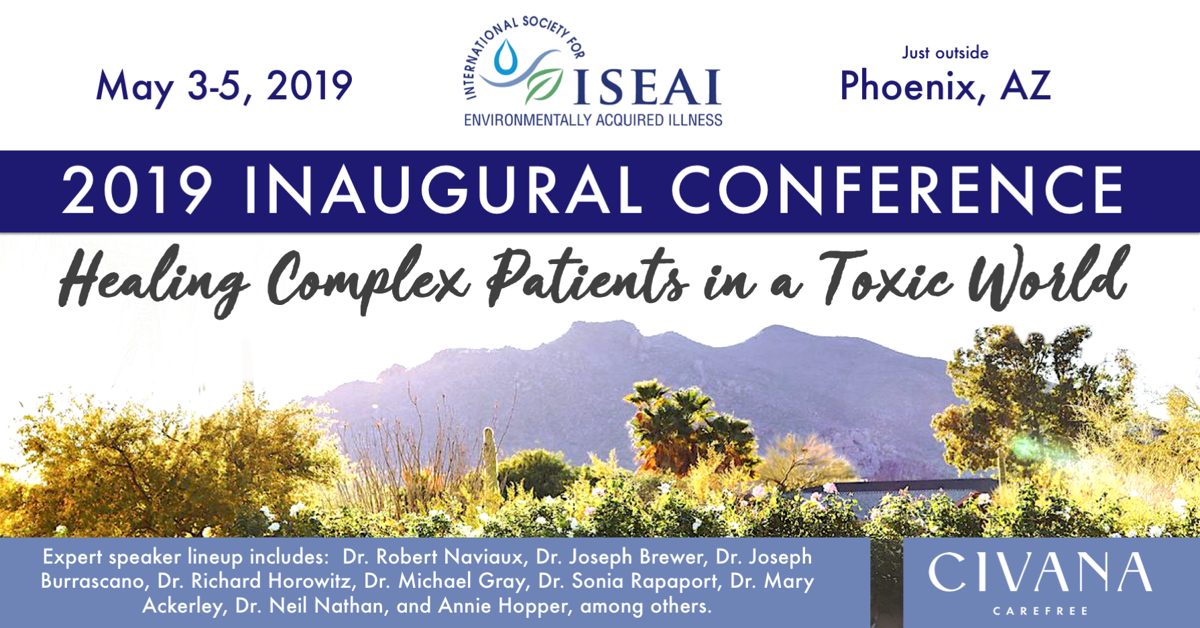
The ISEAI inaugural conference, Phoenix, May 2019

01

A complicated patient presentation

Environmental toxicity creates a very complicated patient presentation that affects multiple systems and a variety of seemingly unconnected symptoms, making diagnosis and treatment very challenging.

It is now recognised that Lyme disease, toxic mould, heavy metals and pollution are some of the contributors to our type 3 patients. With so many environmental toxins and toxicants being identified as neurotoxic, we have to be able to correctly diagnose and effectively treat.

CogMission’s challenge is to identify which of our cognitive patients have an element of type 3, to prevent further exposure to the toxic elements, and to safely remove toxins from the body before repair of the nervous system can take place.

02

Filling our toolbox

The Phoenix conference has filled up our toolbox in terms of both testing and treatment. Jean and I are delighted to say that the think tank of knowledge that was in that room was tremendous. We have made new connections that we can reach out to when we are faced with complicated cases.

When we initially began Dr Bredesen’s work, we thought that the type 3 patients would make up only a small percentage of our cases. However, we have now found that most cases will have an element of toxicity, even if it is not the main cause of cognitive decline.

03

Alarming statistics

Some of the statistics are alarming. A 2005 study of cord blood from newborns found that on average, a child enters this world exposed to over 287 toxins, including pesticides, consumer product ingredients, and wastes from burning coal, gasoline, and garbage. Out of those, 217 have documented effects on brain and nervous system function.1 It would appear that the next generation will be severely impacted unless our environmental laws change.

So, now armed with more tools and ideas, we are looking forward to seeing how we can incorporate this knowledge for our patients. Over the next few weeks, we will be sharing some of the pearls that we plucked from the event. We’ve also come back realising that it will be essential to start preventative neuroprotection work with future generations.


Refs

References

Environmental Working Group, Body burden: the pollution in newborns (2005). ewg.org/research/body-burden-pollution-newborns ↩

Keep reading

More articles

This article was first published on the CogMission blog. CogMission is Jean’s sister company, specialising in brain health.

This article is for general information and isn’t a substitute for personal medical advice. Please don’t start or stop any medication without speaking to a qualified practitioner.

Want personalised advice?

Book a free 15-minute call to talk about your health and whether Jean can help.

Free, no obligation. Consultations from £240 + VAT. See fees